

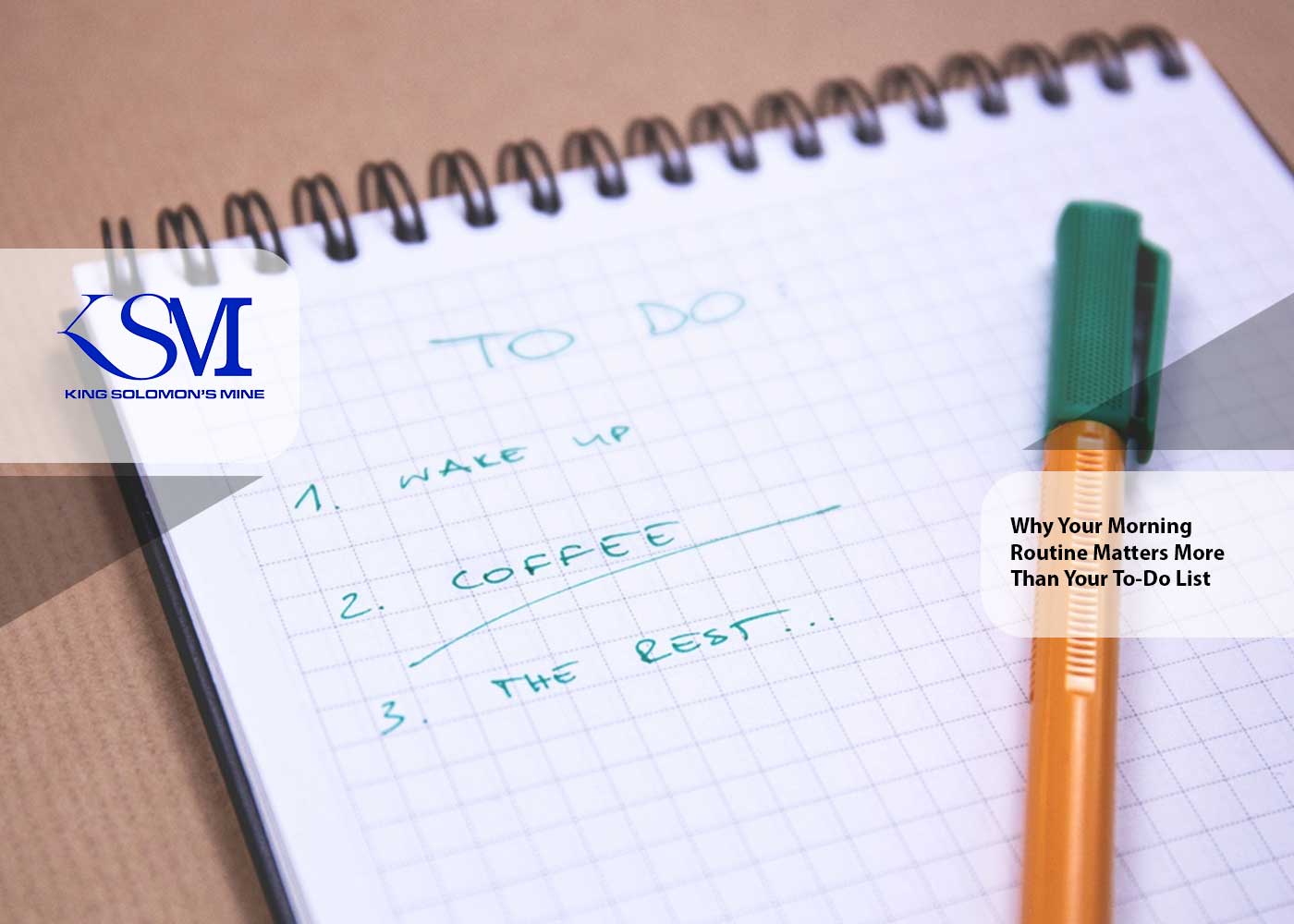
One misconception a lot of people have about having a
productive day is that it comes down to how much is on their to-do list. But
they often forget that how you start your day, or what your morning routine
includes, can go a long way in determining how productive you actually end up
being, or how much you get to achieve by the end of the day.
Although some people are not naturally morning people, our
body clock is built around starting the day in the morning, whether we like it
or not, and how you start that day actually matters. So, this includes what you
have for breakfast, the first thing you do when you wake up, and how you plan
out your day. A to-do list only works if you have the mental clarity, energy,
and focus to actually execute it. Some people write their to-do list at night
before bed, others write it first thing in the morning, but either way, that
list is only useful if you are actually capable of following through on it.
This is where psychology, mood, and what researchers call cognitive readiness come in. Within the first thirty to forty-five minutes after you
wake up, your body experiences a rapid rise in cortisol known as the cortisol
awakening response, and research has linked this to preparing the brain for the
demands of the day ahead. There is also decision fatigue to consider, the
psychological concept first described by researcher Roy Baumeister,
showing that the more decisions we make throughout the day, the harder each one
becomes to make well. In other words, your first hour does not just affect your
mood, it actually shapes how much mental capacity you will have left to execute
everything on that list you wrote.
How to Build a Morning Routine That Helps You Follow Through
If your mornings are shaping the rest of your day this much,
it makes sense to be intentional about them. So, here are a few things worth
building into your routine.
1. Do not start the day with your phone.
This is one of the easiest habits to fall into and one of
the most disruptive. Checking your phone first thing exposes you to
distractions, notifications, and sometimes information that can affect your
mood before you have even properly woken up. An email that disappoints you or a
message that stresses you out can colour the rest of your day before it has
really begun.
2. Prioritise breakfast.
This is not new advice, breakfast has been called the most
important meal of the day for a reason, but honestly, there is truth behind the
phrase. If you are not someone who enjoys a full breakfast, that is fine, but
try to have something, even something small, rather than starting your day on
empty.
3. Hydrate before anything else.
After hours of sleep, your body wakes up mildly dehydrated,
and something as simple as a glass of water before your tea or coffee can help
your body and mind feel more alert before you even step outside your room.
4. Give yourself a few minutes of stillness.
Before diving into tasks, messages, or planning, take a few
quiet minutes to sit with yourself. This does not have to be a formal
meditation practice, it can simply be sitting in silence, stretching, or
looking outside. For those who are religious, this can also be a moment to pray
and talk to God before the day begins.
5. Start with your most difficult task first.
When you are deciding what to tackle first, start with the
hardest or most demanding task on your list, not the easiest one. Early in the
day, your energy, focus, and attentiveness are still at their peak, and as the
day goes on, all three tend to decline. Tackling the difficult task while you
still have that mental sharpness means you are more likely to actually get it
done well, rather than pushing it later into the day when you have less left to
give. This way, by the time your energy naturally dips, you have already
handled the hardest part, and everything else feels more manageable in
comparison.
Remember that none of these has to happen in a rigid order,
and you do not need all five to feel a difference. The point is not to build an
elaborate, hour-long ritual, it is to give your mind and body a fair chance to
actually be ready for whatever is on that to-do list.
At the end of the day, a to-do list is only as good as the
state of mind you are in when you approach it. You can write the most
organised, realistic list in the world, but if you start your morning depleted,
distracted, or overwhelmed, following through on it becomes an uphill battle. A
better morning is not a separate project from productivity, it is what actually
makes productivity possible.
Author: Chinasa Lovlyn Nwachukwu, Mental Health Coach,
Advocate, and Writer.
If you wish to contribute to our blog, please email us on media@kingsolomonsmine.com.ng.


Leave a Comment